

Theraputic BOTOX® Treatment

If you routinely wake up with headaches or pain and discomfort in your jaw, neck, or shoulders, you may have temporomandibular joint (TMJ) disorder or bruxism. TMJ disorders, referred to as TMD, are characterized by jaw problems, including clicking or popping in the jaw and difficulty opening and closing your mouth. Bruxism is a condition where you habitually clench or grind your teeth.
Millions of people have either TMD or bruxism, and some people have both. If you have one of these problems, you are not alone; however, that does not mean you shouldn’t seek treatment. TMJ disorders can cause patients unnecessary pain when left untreated, and untreated bruxism can lead to tooth damage and sensitivity.
Treating TMD and Bruxism with BOTOX®
While many dentists treat TMD and bruxism with nightguards or splints, which are helpful, we also treat these issues with BOTOX, short for botulinum toxin. The BOTOX is injected into painful problem areas to relax them and provide relief.
BOTOX treatments are quick and easy, making them suitable for TMD and bruxism pain. Of course, your specific treatment depends on your situation and your needs. Your dentist may recommend a nightguard, BOTOX, or filler treatments for best results.
How Does BOTOX Provide Pain Relief?
BOTOX and filler injections relieve pain caused by TMJ disorders and "freeze" facial muscles to prevent jaw tension, clenching, and teeth grinding. Relaxing these muscles helps relieve pain in the jaw, neck, and shoulders and reduces the occurrence of migraines and headaches. It can also help protect teeth from damage due to pressure or grinding.
If you’re interested in BOTOX, please contact us to schedule an evaluation. We will thoroughly examine your situation to determine the cause of your jaw pain or teeth grinding and begin treatment.
We look forward to welcoming you to our dental practice.
Frequently Asked Questions
BOTOX® has emerged as an effective treatment option for temporomandibular disorder (TMD), offering relief for patients suffering from jaw pain, tension, and dysfunction. When used for TMD, BOTOX works by temporarily relaxing the overactive muscles responsible for jaw clenching and grinding.
TMD often results from excessive muscle activity in the masseter and temporalis muscles, which control jaw movement. These muscles can become tense, fatigued, and painful due to chronic clenching, grinding (bruxism), or stress. BOTOX contains botulinum toxin, which blocks nerve signals to these muscles, reducing their ability to contract forcefully. This relaxation decreases muscle tension and alleviates the pain and discomfort associated with TMD.
The treatment involves strategic injections into the affected jaw muscles. The procedure is quick, typically taking only 10-15 minutes, and requires no downtime. Patients usually begin experiencing relief within a few days to a week, with full effects developing over two weeks. Results typically last three to six months, after which repeat treatments may be needed to maintain benefits.
BOTOX for TMD can reduce symptoms including jaw pain, headaches, facial tension, and difficulty opening or closing the mouth. It also helps prevent teeth grinding damage that can lead to worn enamel and broken dental work. While BOTOX doesn't cure TMD, it provides significant symptom management and can be part of a comprehensive treatment plan that may include physical therapy, oral appliances, and stress management techniques.
Consult with our team to determine if BOTOX therapy is appropriate for your TMD symptoms.
Our Team
-

Dr. Laura Capati
Read MoreDr. Laura Capati grew up in Omaha, Nebraska, and earned her bachelor's degree at Washington University in St. Louis. She went on to graduate from Southern Illinois University with a Doctorate in Dental Medicine, then completed her three-year periodontic residency at St. Louis University.
Dr. Capati is a Diplomate of the American Board of Periodontology, a distinguished credential that signifies she has achieved significant accomplishments beyond the mandatory educational requirements of the specialty. This board certification demonstrates her commitment to the highest standards of periodontal care and expertise.
She maintains …
Theraputic BOTOX® Treatment Technology
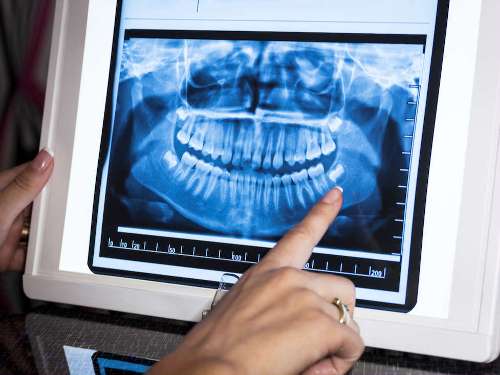
Panoramic X-Ray
Individual x-rays are beneficial for identifying decay, infection, and many other dental conditions. Having a full-picture view is often helpful, and that’s where panoramic x-rays come in handy. Panoramic x-rays take a full-picture view of the teeth, bone, jaw joints, and other biological landmarks. These types of x-rays are helpful in planning oral surgeries, such as extractions and dental implant placement, as well as identifying tumors, cysts, and jaw joint problems.